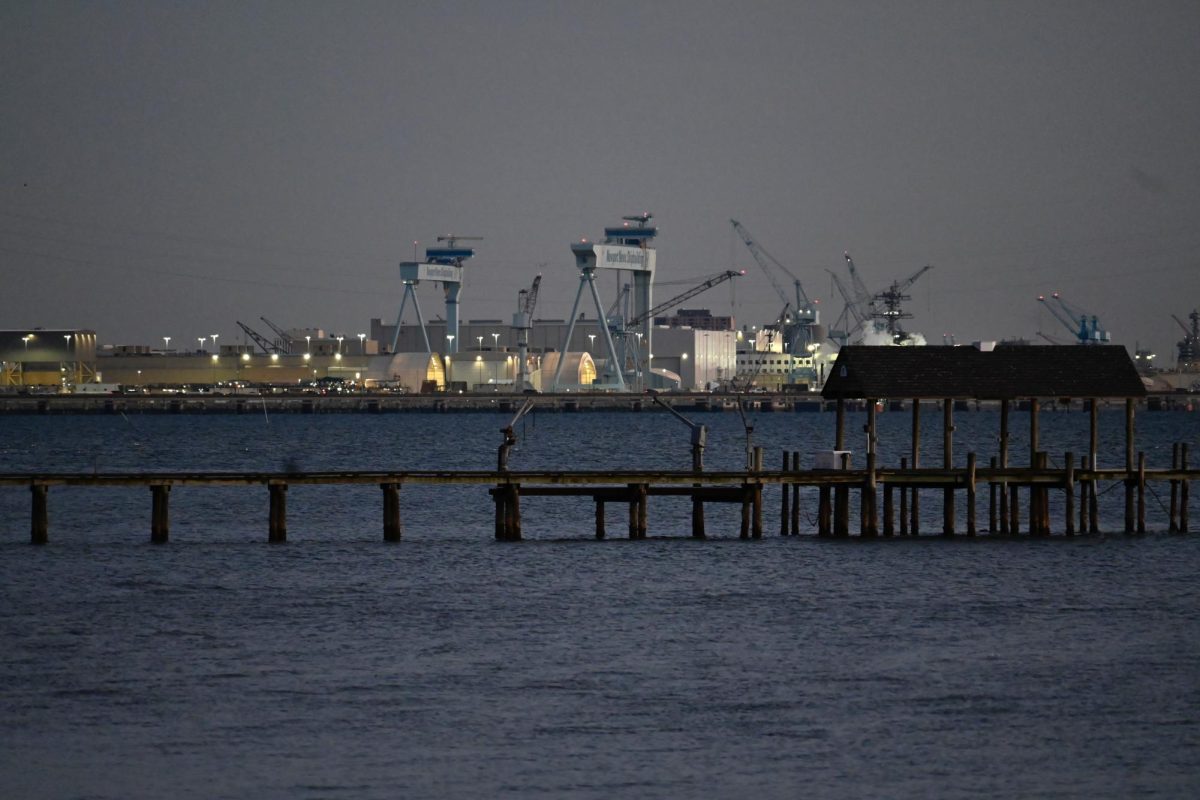
NEWPORT NEWS, VA – Last Friday on Feb. 13, a fuel transfer operation went awry at Huntington Ingalls Industries, Inc. (HII)’s Newport News Shipbuilding division when JP-5 jet fuel was accidentally released into the James River.
The operation was to transfer fuel into the pre-commissioned USS John F. Kennedy (CVN 79), an aircraft carrier for the U.S. Navy.
The original statement estimated only roughly 50 gallons were released, however it was later determined through “follow-up investigations and fuel tank measurements” that the total volume discharged was 7,749 gallons, according to the Virginia Department of Environmental Quality.
HII stated that the cause of the incident is under active investigation, as of Feb. 17. According to a statement released by Newport News, VA government officials, there are no broad public health threats associated with the spill at this time.
However, they also stated that local residents may notice strong fuel odors and have been advised to avoid areas of the river where “sheen is visible.” Local drinking water, tap systems and public water systems have not been impacted.
The spill also has not reportedly impacted shellfish growing or local watermen as of Feb. 17.
Mallory Shelbourne of the United States Naval Institute News reported on Feb. 4 that the USS John F. Kennedy (CVN 79) recently completed Builder’s Sea trials. These trials are composed of Newport News Shipbuilders, sailors and Navy personnel to test the operations of the ship.
The fuel released, JP-5, is a propellant substance used to provide thrust, or move objects into motion.
According to the CDC, JP-5 is a colorless liquid made up of chemical compounds, hydrocarbons.
When released into the environment, they reported that some chemicals will dissolve in water, some will evaporate and some chemicals will attach to materials in the ground and can remain there for over a decade.
Although there are few lasting side effects of simple exposure to these fuels, some may include nausea, headaches, drowsiness and more. Ingestion of the fuel has been reported to have more severe, harmful effects.